Book a demo
THE PLATFORM

One camera above the station. Four modules reading the same feed

Assembler AI builds Operator Vision, a computer vision platform for manual work in manufacturing. It reads every action at a workstation against your work instructions and turns it into signals you can act on: a live alert at the bench, a step-level time study, and video behind every event.

Live in two weeks. No MES integration required. Your work instructions are the only input Operator Vision needs.

Problem

Every machine in your plant reports. The workstations don’t

Your presses report. Your CNC machines report. The stations where an operator performs twenty steps in sequence produce no data at all, which leaves the most error-prone work in the building as the least measured. That gap costs you in three directions at once. Quality, because a missed step is invisible until it reaches inspection or a customer. Speed, because no one can say which step drifts or on which shift. And risk, because the actions that ruin a part were never written down as steps in the first place. Between 50 and 70 percent of scrap at high-mix, low-volume manufacturers traces back to how the work was performed, rather than to suppliers or design. It’s the highest controllable cost on a manual line and the one with no instrumentation behind it.

What reports today

  • Presses
  • CNC machines
  • Automated cells
  • Label and place in the outbound tray

Instrumented. Measured. Reported.

What doesn’t

  • Twenty steps performed in sequence by hand
  • The step that got skipped
  • The inspection that took one second
  • The action nobody wrote down as a step

No data at all. The most error-prone work in the building.

What It Is

One deployment, four jobs

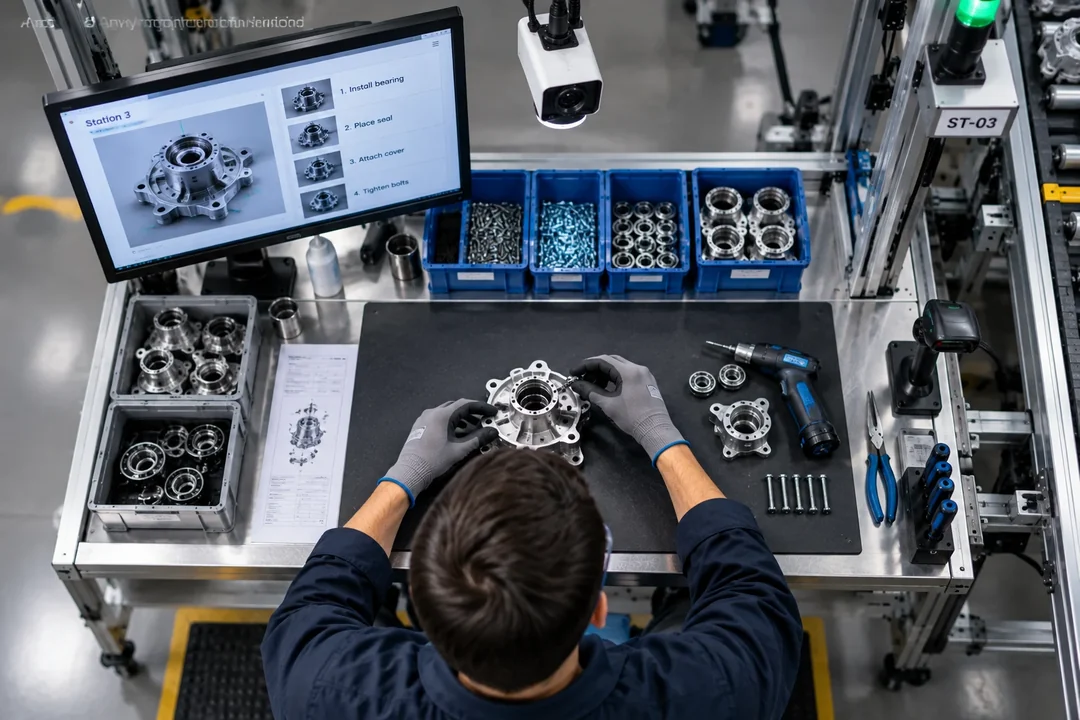
Camera above a workstation watching an operator assemble a part

Operator Vision is a single camera above a workstation, a model trained on your work instructions, and a platform that reads the two against each other on every cycle. There is nothing to install on your line, nothing bolted to your tools, and no operator input required. The camera watches, the model reads, and the four modules take that same feed and answer four different questions. You don’t buy the modules separately and you don’t add hardware to switch one on.

The modules

Four questions, one feed

  1. Real-Time Quality Alerts

    Was every step performed, in the right order, with the right part and the right tool? Missed steps, broken sequence, wrong variant, wrong label, wrong count, and the checks that get short-changed when work stacks up.

    Explore
  2. Continuous Improvement Insights

    Where does the time actually go? Step-level cycle times on every station and shift, with video on every outlier, and the answer to why one cycle took twice as long.

    Explore
  3. Teammate AI

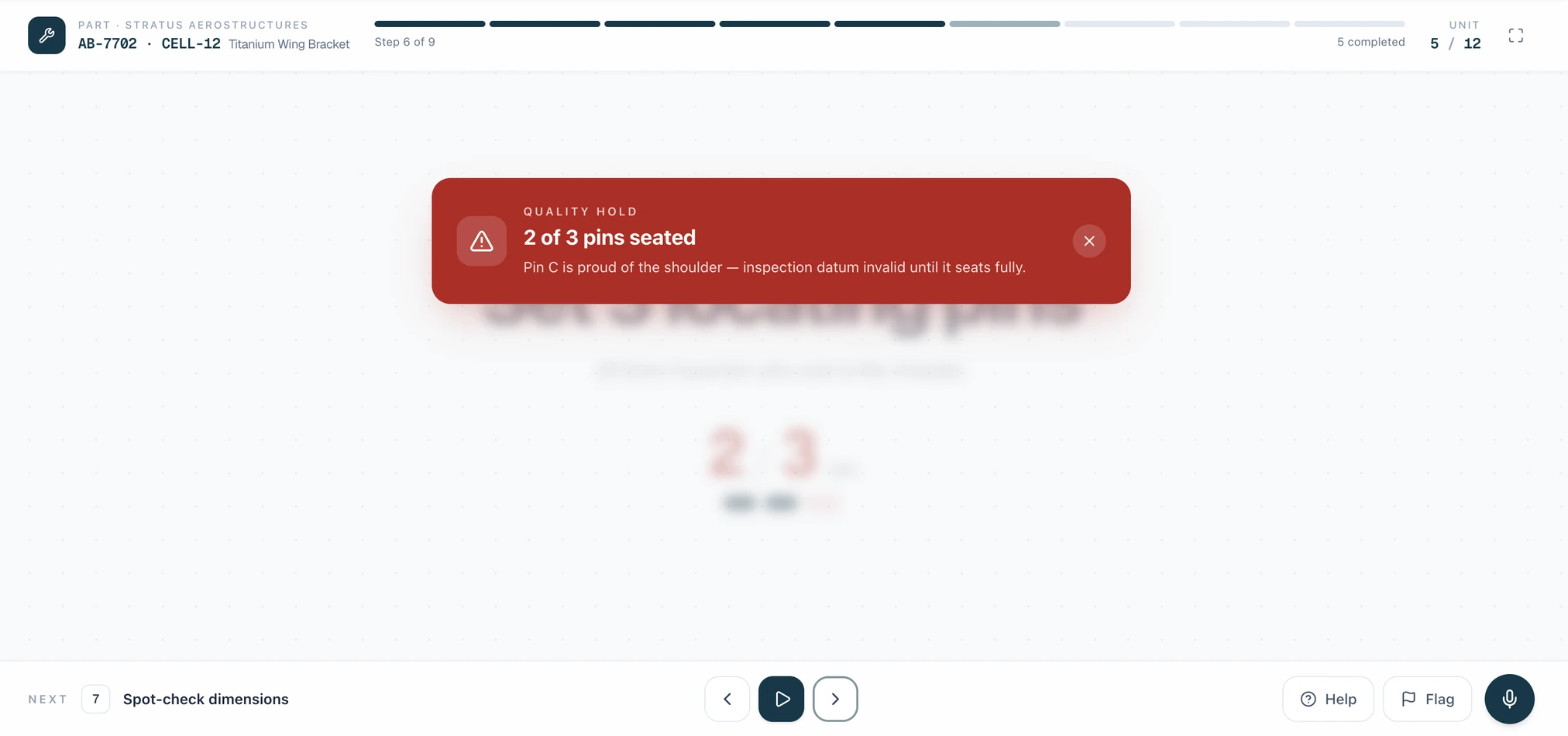
    Does the operator know before it’s too late? Your work instructions on a screen at the bench, following along, with an alert that holds until the action matches and a route back to engineering.

    Explore
  4. Real-Time Risk Detection

    What about the steps no operator should ever do? The do-not-do list your work instructions never cover, from a part off the floor to a step into a zone that has to stay clear.

    Explore
  • Operator station display with live step guidance
How it works

Your work instructions in, on day one

  1. Day 1

    Define the Standard

    You send the work instructions you already have. Operator Vision reads them and learns the steps, tools, and parts for that station. If that station has none written down, Assembler AI will work with you to create them.

  2. Week 1

    Install the Camera

    The camera goes up with NDAA-compliant hardware Assembler AI supplies and provisions. Nothing about the line changes. The camera sits on its own subnet and streams out over an encrypted VPN, so the only thing your IT team has to open is one outbound path.

  3. Week 2

    Calibrate & Train

    Assembler AI calibrates and trains the model on your alerts. Operator Vision records while we work through anywhere the footage and the document disagree. Ghost steps turn up here, written instructions no one has performed in years, alongside steps your operators do that the document never captured.

  4. Day 15

    Go Live

    Alerts go live against a standard everyone in the room signed off on, and step-level data starts arriving on every cycle.

The alert order

The operator fixes it on the spot

  • FIRST

    The operator

    The alert reaches the station the moment it fires, while the piece is still at the bench and the fix costs a few seconds of extra work. The station screen shows what triggered it and gives the operator a way to respond, acknowledge, or say the alert was wrong.

  • next

    The supervisor

    If it isn’t handled at the station, the alert escalates with the video attached, in time to hold the unit rather than chase it downstream.

  • ALWAYS

    The dashboard

    Every event lands in the record whether it was fixed in five seconds or escalated to a manager. One alert is noise. The same alert forty times on second shift is a finding.

Operator Vision only sends alerts it has high confidence in. Assembler AI works through the early weeks alongside your team, setting which events matter, who receives them, and what happens next. If something you care about isn’t reaching anyone, the threshold opens up. If a rule is firing on noise, it tightens.

By role

Who this is for, and what they get

  • Quality

    Sequence, part identity, and inspection dwell time checked on every cycle rather than on the ones somebody sampled. Root cause analysis that used to hold a room until eight at night resolves in minutes, because the video of the actual cycle is one click from the alert.

  • Continuous improvement

    A time study that runs itself on every station, instead of the quarterly pass with a stopwatch. Step-level variance by station, shift, and SKU, with video on every outlier, and improvement tracking that shows what each change actually did to cycle time.

  • Operations leadership

    Every station and every shift on one screen, with the ability to compare cells, shifts, and plants against each other. Scrap and rework carry a shop rate, and the data ties both back to the step that produced them.

  • Operators and production managers

    New operators reach the rate of your experienced ones sooner, because the correction arrives at the bench while it still costs seconds. Faces are blurred, no names or IDs are collected, and the footage protects the operator who did the job right as often as it flags the one who didn’t.

What it sees

If an operator at the station could see it, so can Operator Vision

  • Operator assembling a part at a bench seen from the station camera

    Anything visible at the station

    Steps, sequence, parts, tools, placement, counts, and timing, on every cycle rather than on the ones somebody sampled.

  • Closed housing on the bench with the assembly sequence in view

    What sits inside a closed housing

    Not visible to a supervisor standing there either, so it isn’t visible to the camera. What gets checked is the sequence that put it there

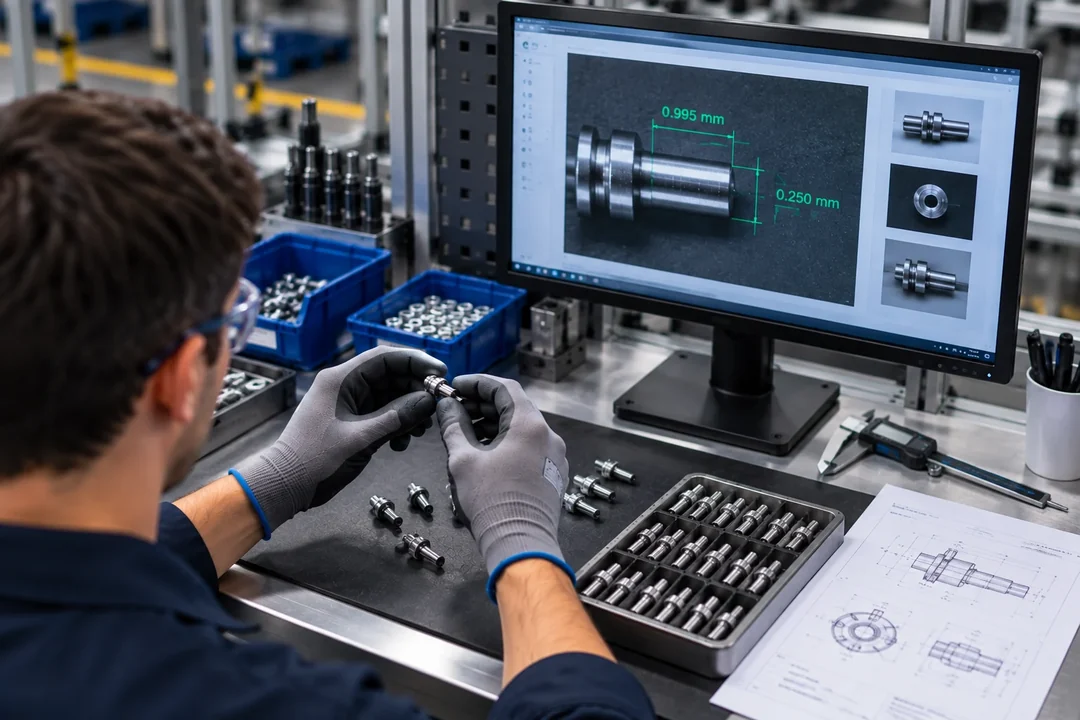
  • Close-up of small parts and markings on a workstation

    Detail at the scale your station allows

    Very small parts and fine markings depend on camera position, and Assembler AI confirms what’s resolvable during calibration rather than after go-live.

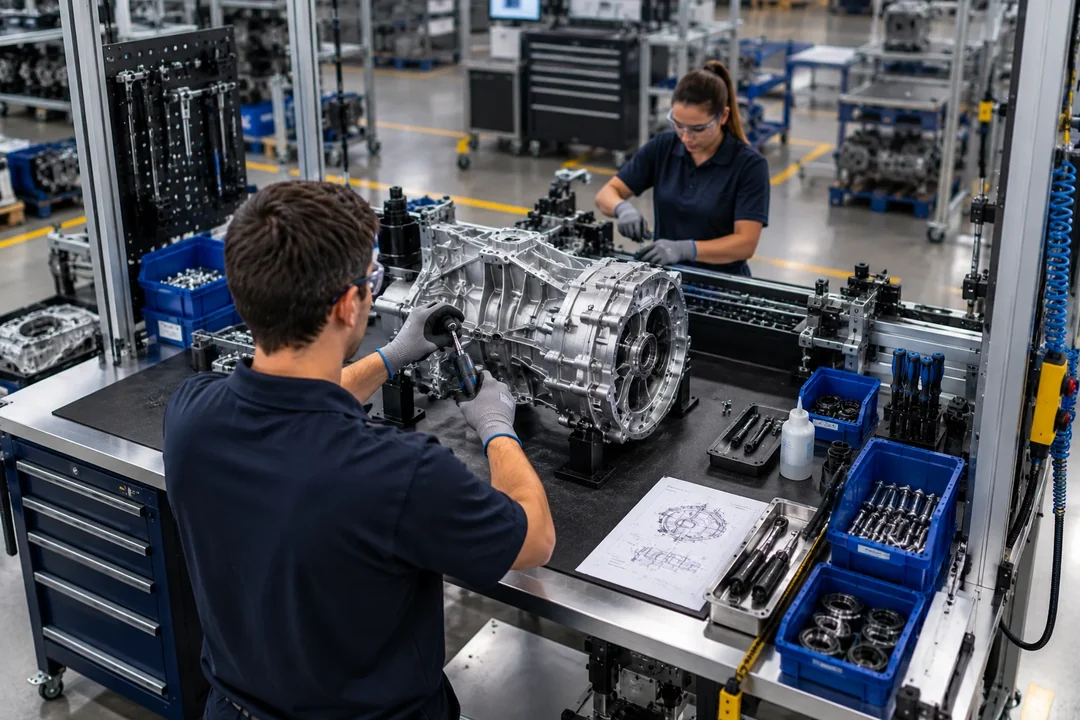
  • Operator walking around a large part to reach the far side

    The whole bench, including the far side

    One camera covers one station. On a large part, an ATV or a truck bed, an operator walks around to the far side, so those stations get a two-camera setup sized at the walkthrough.

Trust and security

Built to clear your IT review

Your data, your terms

Video streams over RTSP inside an encrypted VPN tunnel, and everything at rest is AES-256 under a customer-managed key issued per tenant. Logically isolated per customer, owned by you. Default retention is twelve months, you can set your own, delete earlier, or export at any time.
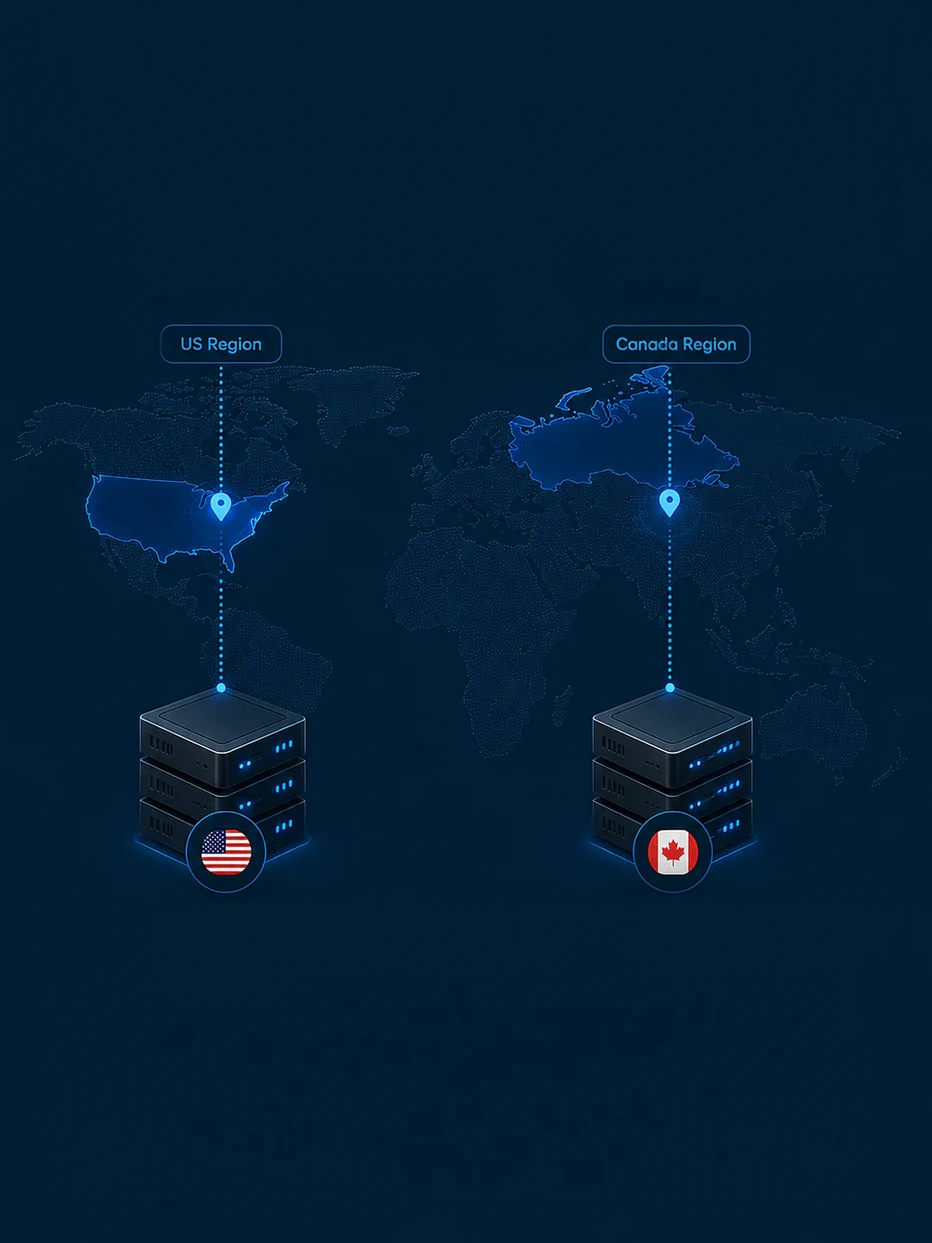
US and Canadian regions

US or Canadian data residency, your choice

You pick the region at deployment. Production data lives there and stays there.

NDAA-compliant camera

Hardware that survives a security review

NDAA-compliant cameras, with no restricted foreign-made surveillance equipment in the stack.

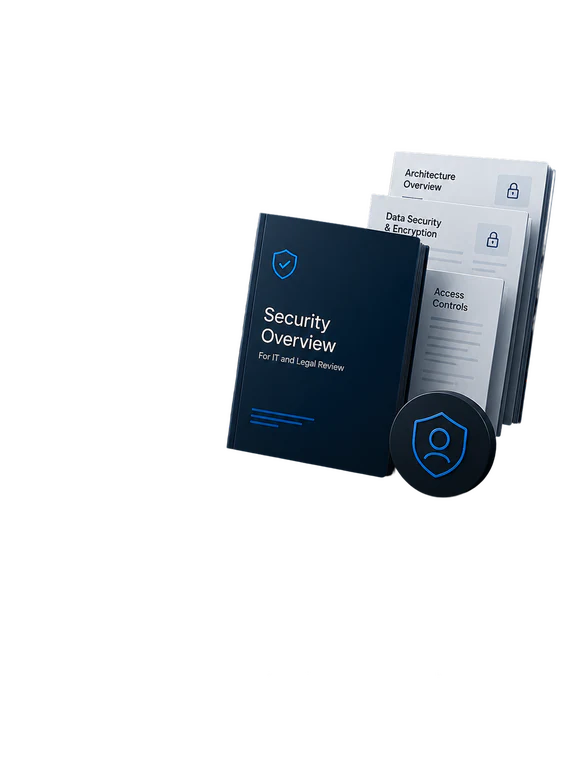
Security overview documents

Documentation written for reviewers

Our security overview goes to IT and legal, not to marketing.

Request it
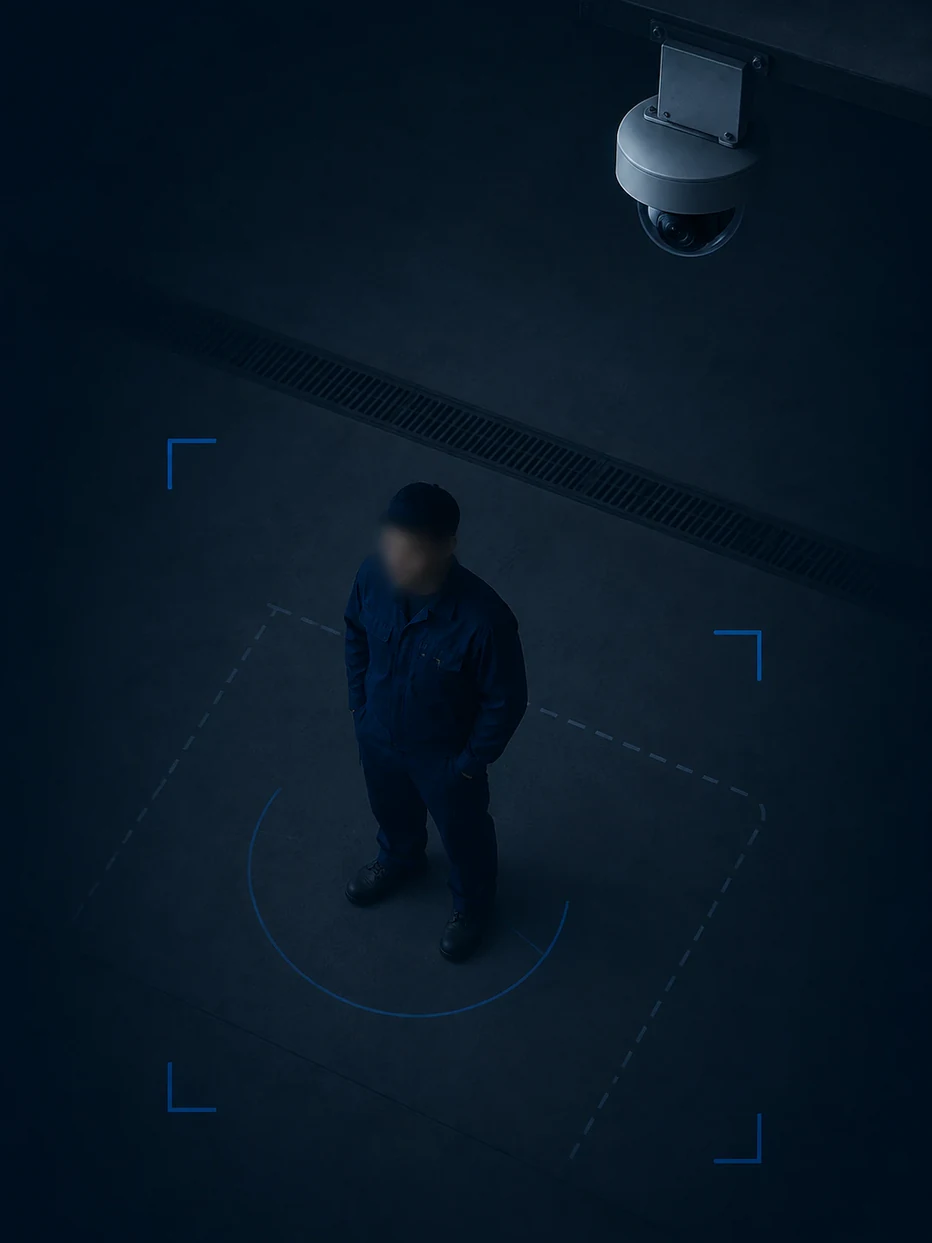
Camera above the shop floor

Unionized environments

Operator Vision runs in unionized plants, with faces blurred and no tracking of individual operators. Assembler AI supports the conversation with your union representatives so everyone sees the same thing before the camera goes up.

Scale

Start with one station. The data gets more valuable with every one you add

No one instruments a plant on a vendor’s promise. So you start small, with the station costing you most. Two weeks later you have step-level data on your own parts, your own operators, and your own work instructions.

What happens after is worth understanding before you begin. This data is comparative, which means every station you add makes the ones you already have more useful.

  • One station

    How the work actually happens against how it’s written.

  • The line

    Benches running the same work become directly comparable, and variance stops being anecdote.

  • The factory

    Shifts and cells compare against each other, and process changes get measured against how the station ran before them.

  • Across sites

    The same build in two plants becomes comparable for the first time, and the best method anywhere in your group becomes the standard everywhere.

A single station gives you a number. A factory gives you a distribution. A group of plants gives you a benchmark no consulting study could produce, and unlike a study it keeps updating itself as your work changes. If you’re heading toward multiple sites, tell Assembler AI early and we’ll scope single sign-on, role-based permissions, and per-site data separation with your IT and HR teams while the first station runs.

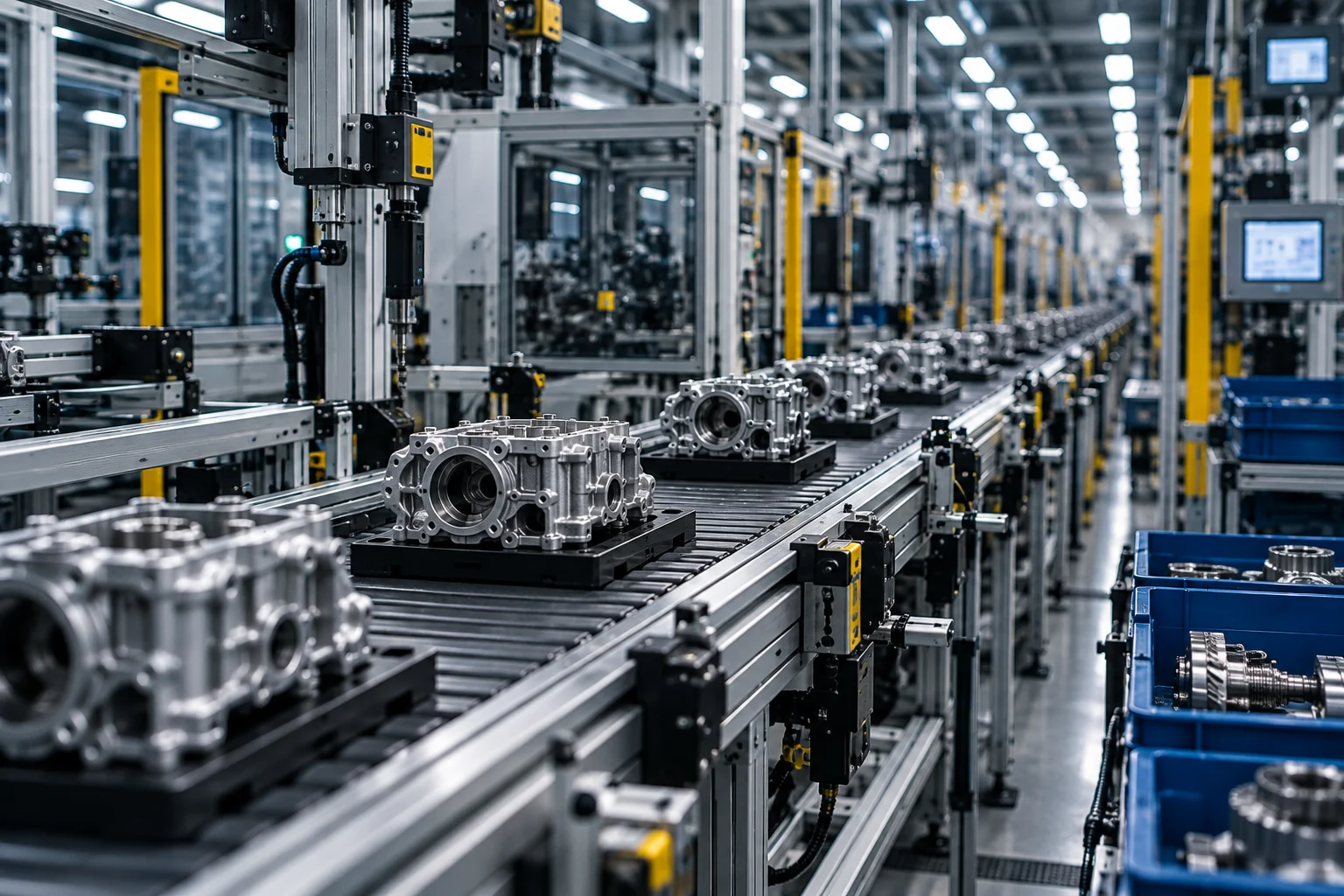
Workstations

Any station where the work is done by hand

  • 01Assembly

    Sequence, fasteners, missing components, wrong part.

    See assembly
  • 02Inspection

    Dwell time, both sides of the part, automatic scrap and pass counts.

    See inspection
  • 03Injection molding

    Sprue cut, inspect, bag, label, correct box, every cycle.

    See injection molding
  • 04CNC machining

    Setup, tool change, orientation, measurement, deburr, final check.

    See CNC
FAQ

Questions your team will ask

  • No, and most customers start with one. They run on the same camera and the same feed, so adding another later is a change in what you’re subscribed to rather than another deployment.

  • No. Operator Vision runs standalone and your work instructions are the only input. Assembler AI provides MES and ERP integrations when you want data flowing both ways.

  • Assembler AI assumes they might be. The first two weeks are calibration, comparing footage to the document and settling the differences with your team before anything fires. If a station has no written work instructions at all, we’ll work with you to create them.

  • Assembler AI’s proprietary manufacturing vision models start around 80 percent accuracy on a new station and reach the mid 90s after the initial calibration. Those first two weeks are what get it there on your parts rather than in a demo.

  • No. Faces are blurred, no operator names or IDs are collected, and the analysis sits on the process. The station screen is designed the same way, with the feedback reaching the bench first.

  • Common, and it’s the environment Operator Vision was built for. Where your SKUs look visually different, Operator Vision identifies which one is in production and switches automatically as the station changes over.

  • Operator Vision handles most changes on its own, including lighting shifts and minor differences in parts. New work instructions or a complete layout change need additional training, which Assembler AI takes care of for you.

  • You do. Encrypted in transit and at rest, isolated per customer, with a default twelve-month retention you can change or export from at any time.

Pick your worst station. We’ll start there

Assembler AI walks your floor and sorts the stations into three piles: speed problems, quality problems, risk problems. You pick where to start. Operator Vision goes live in two weeks, and inside the month you have the numbers on your own parts.

No MES integration required, and it scales easily across your sites.

Related

Where the cost lands hardest

  • Aerospace and defense

    Zero tolerance, redundant inspection, and a backlog your executives ask about weekly

    See aerospace
  • Automotive components

    Your customer catches everything, so every escape is a complaint by Tuesday

    See automotive
  • Medical devices

    High-sensitivity parts built under GMP, where a piece off the floor never goes back on the line

    See medical devices
  • HVAC

    High mix, thin margins, configurations that change by the order

    See HVAC